
Are You Parking Safely and Smartly?
Are You Parking Safely and Smartly?
Finding a parking space can sometimes feel like winning the lottery. After driving around for several minutes, you finally spot an open space. Success! But before you celebrate your amazing parking skills, take a few extra seconds to make sure you're parking safely and legally.
Make sure that you leave your vehicle in a place where it won't create a hazard, receive a parking ticket, or become an easy target for theft or damage.
Choose a safe location
Whenever possible, park in a well-lit area where there are other people and vehicles nearby. Parking under lights or in areas with regular activity can discourage theft and vandalism. If you're parking at night, avoid isolated corners of large parking lots whenever possible.
If you're parking on a street, choose a legal space that gives other drivers plenty of room to see around your vehicle. Never park where your vehicle blocks intersections, driveways, fire hydrants, sidewalks, bike lanes, or crosswalks.
Remember, "I was only going to be there for a minute" is usually not an acceptable excuse for blocking traffic or receiving a parking citation.
Stay inside the parking lines
Parking spaces have painted lines for a reason. They help everyone fit safely and efficiently into the parking lot. Take a few extra seconds to center your vehicle between the lines. Parking over a line can make it difficult for another driver to enter or exit their vehicle. It can also increase the chance of someone accidentally bumping your car with their door.
If you accidentally park crooked, simply back out and try again. Even experienced drivers occasionally need a second attempt.
Watch for parking (or no parking) signs
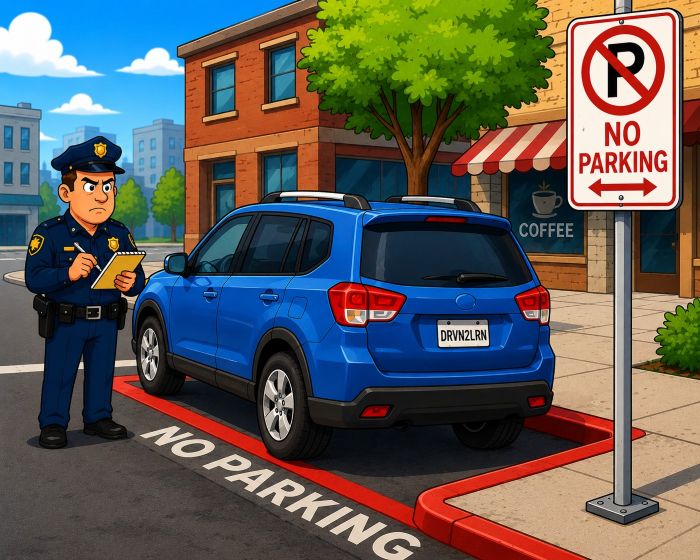
Before leaving your vehicle, look around for posted parking signs. A parking space that looks perfectly fine may actually have restrictions. Signs may prohibit parking during certain hours, reserve spaces for customers, require permits, limit parking time, designate loading zones, or identify accessible parking spaces.
Ignoring these signs can lead to parking tickets, towing, or both.
Think before you walk away
Make sure you have your key or key fob in your hand, purse, or pocket before exiting your vehicle.
Then, before locking your vehicle, ask yourself a few quick questions:
* Am I completely inside the parking space?
* Is my vehicle legally parked?
* Am I blocking anyone or anything?
* Is this a safe location?
* Have I turned off the engine, locked the doors, and taken my keys?
These simple checks take only a few seconds but can save you time, money, and frustration later.
Parking is part of driving
Many people think the trip ends once the vehicle stops moving. In reality, parking is simply the final step of every drive. A little patience and attention can help prevent tickets, collisions, and unnecessary headaches.
At NHSA, our goal is to provide online driver education courses that equip all drivers with what they need to be safe drivers. Whether you are a teen seeking a learner’s permit, or an adult driver seeking a basic driver safety course, check us out online to see what courses are available in your state!
- 2026
- 2025
- 2023
- 2022
- 2021
- 2020
- 2019
- 2018
- 2017
