
June is National Camping Month - Tips for Drivers
June is National Camping Month - Tips for Drivers
“We have five flashlights and the batteries only work in one!”
“If you think that’s bad, we ran out of mosquito repellant on the first night. We are literally being eaten alive!”
"Oh yah. We are not even there yet. I have no idea where to find my spare tire, or even if there is one!"
June is National Camping Month, and campgrounds across the country are filling up with families, outdoor enthusiasts, and travelers looking for a break from everyday life. Whether you're driving a car, towing a camper, or traveling in an RV, a little preparation can help your trip go smoothly.
Prepare your vehicle
Before heading out, check your tire pressure, engine oil, coolant, battery, and windshield washer fluid. If you vehicle is an RV, or if you are towing a trailer with propane and other onboard systems, be sure to check them before your trip. Make sure that all awnings, slide-outs, and storage compartments are secured before driving.
That old trailer that hasn’t moved in almost a year?
If you're towing a trailer, inspect the hitch, safety chains, electrical connections, and trailer tires. A few minutes of inspection can help prevent hours of roadside frustration. Trailer tires are notorious for aging out before they wear out, so look carefully for cracks or signs of deterioration.
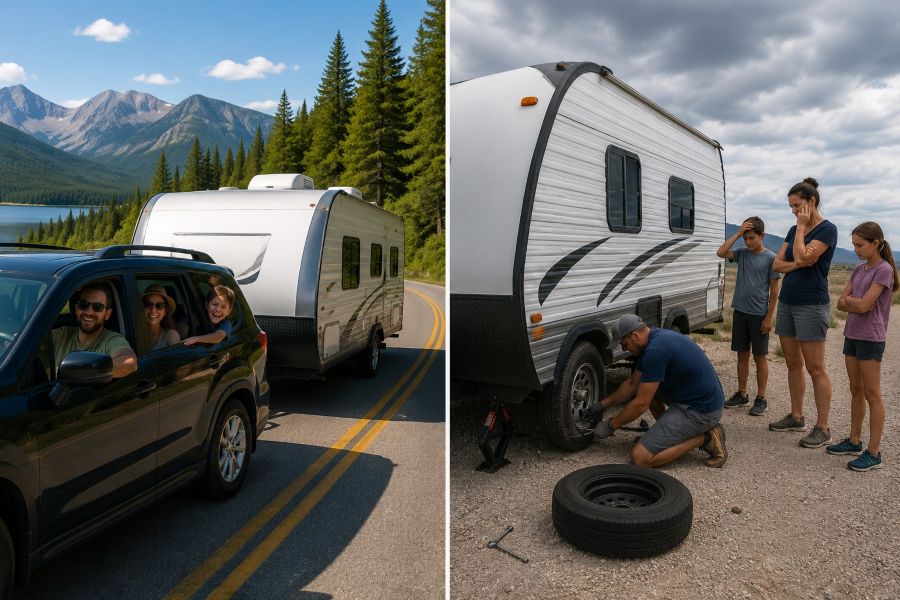
No doubt you have seen trailers alongside the highway in the summer, with some unfortunate person sweating away while swappin in a (dubious) spare tire. Their families stand in the background, wondering when the fun starts. Don’t get in on that adventure! Check your tires and spares before leaving home.
Know your campground
Does your intended campground require a reservation? Also, before arriving, learn what facilities are available. Some campgrounds offer electrical hookups, water, dump stations, showers, and laundry facilities, while others provide only basic campsites. There is roughing it, and then there is really roughing it! Which do you want?
Review campground rules, including quiet hours, campfire restrictions, pet policies, and parking requirements.
Drive with extra caution
Camping trips often involve unfamiliar roads, narrow campground lanes, gravel surfaces, and increased pedestrian traffic.
* Slow down on curves and rough roads.
* Increase your following distance.
* Watch for pedestrians, bicyclists, and wildlife.
* Use caution when backing into campsites.
* Allow extra stopping distance when towing.
Pack emergency supplies
Yep. Don’t get caught without flashlights, spare batteries, sunscreen, and bug repellent. Also carry water, a first-aid kit, jumper cables, tire-changing equipment, a phone charger, and paper maps or directions. Cell service can be unreliable in remote areas.
Camping should be about enjoying the outdoors, not dealing with preventable problems. A little preparation before you leave can help you arrive safely and spend more time in a hammock and less time muttering about the one thing that you forgot to check.
At NHSA, our goal is to provide online driver education courses that equip all drivers with what they need to be safe drivers. Whether you are a teen seeking a learner’s permit, or an adult driver seeking a basic driver safety course, check us out online to see what courses are available in your state!
- 2026
- 2025
- 2023
- 2022
- 2021
- 2020
- 2019
- 2018
- 2017
