
May is National Moving Month - Tips for Drivers
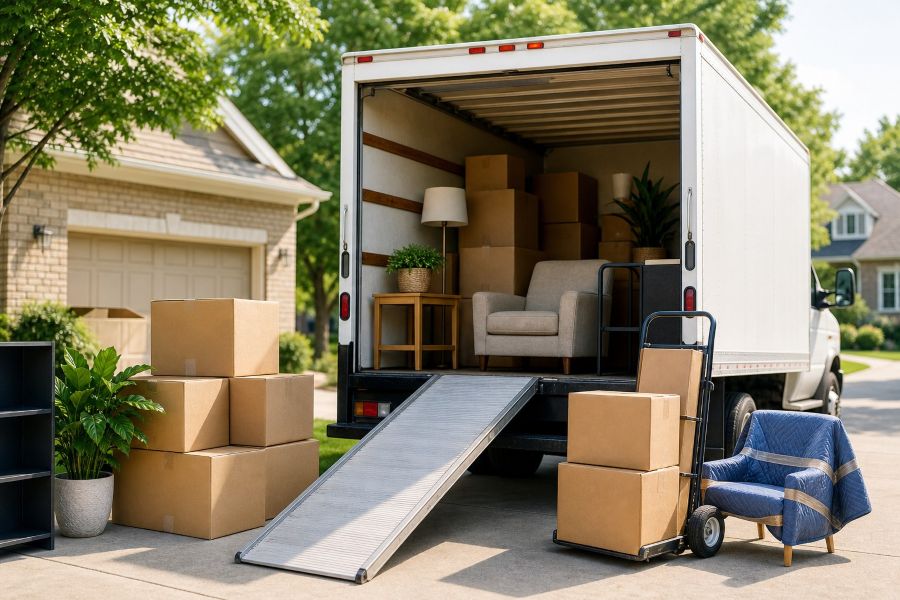
May is National Moving Month – Tips for Drivers
May kicks off the busiest moving season of the year. The weather is nicer, school is winding down, and suddenly it seems like everyone—and their couch—is on the move. If you’re planning to rent a moving truck and drive it yourself, a little preparation can save you money, stress, and possibly your favorite lamp.
Know the Costs Before You Go
Renting a moving truck isn’t just about the daily rate. Most companies charge based on a combination of time, mileage, and truck size. A local move might seem cheap at first, but those per-mile fees can add up quickly.
Also, don’t forget to factor in fuel, insurance coverage, and optional equipment like dollies or furniture pads.
Choose the smallest truck that safely fits your load.
Packing Like a Pro
Don’t just start loading up the moving truck frantically, like you are trying to flee a tornado. Take your time and do it right. Boxes can help to keep everything organized and packed protectively, but make sure that they are not too heavy for you to lift safely.
Packing well isn’t just about protecting your belongings—it also makes driving safer. Keep heavier items on the bottom and distribute the weight evenly from side to side. An unbalanced truck can feel like it’s leaning into every turn, which is not the kind of excitement you want.
Secure everything tightly. Use straps, tie-downs, and padding to keep items from shifting.
Tip: What should you load last? Load essential items (like tools, chargers, snacks, and anything you might need first at your new home) where you can access them easily without unpacking half the truck at your destination.
Do You Need a Special License?
For most household moves, you won’t need a special license. In the United States, a standard driver’s license typically allows you to operate rental trucks up to a certain size (usually around 26 feet). These are the same trucks offered by companies like U-Haul or Penske Truck Rental.
However, if you’re towing a trailer or driving something larger, it’s wise to double-check your state’s requirements. And even if you can legally drive it, that doesn’t mean it will feel natural right away. A 20-foot truck does not handle like your everyday sedan—it’s more like driving your living room down the highway.
Safety Tips for the Road
Driving a moving truck requires a mindset shift. You’ll need more time, more space, and a bit more patience.
* Take it slow. Acceleration and braking take longer, so give yourself extra following distance.
* Mind your height. Low bridges, drive-thrus, and parking garages are not your friends. Know your truck’s clearance before you go exploring.
* Make wide turns. Trucks need extra room to turn without clipping curbs—or unsuspecting mailboxes.
* Use your mirrors. A lot. Your rearview mirror may be useless if the truck is packed full, so side mirrors become your new best friends.
* Plan your route. Avoid narrow streets, steep hills, and tight parking areas when possible. GPS is helpful, but it doesn’t always account for truck-friendly routes.
Final Thought
Moving may never be “fun,” but it doesn’t have to be chaos on wheels either. With a little planning, smart packing, and careful driving, you can get your belongings—and yourself—to your new home safely. And if all goes well, the only thing you’ll have to worry about at the end of the day is where you packed the coffee maker.
At NHSA, our goal is to provide online driver education courses that equip all drivers with what they need to be safe drivers. Whether you are a teen seeking a learner’s permit, or an adult driver seeking a basic driver safety course, check us out online to see what courses are available in your state!
- 2026
- 2025
- 2023
- 2022
- 2021
- 2020
- 2019
- 2018
- 2017
