
What are the Pros and Cons of Using Aftermarket Parts?
What are the Pros and Cons of Using Aftermarket Parts?
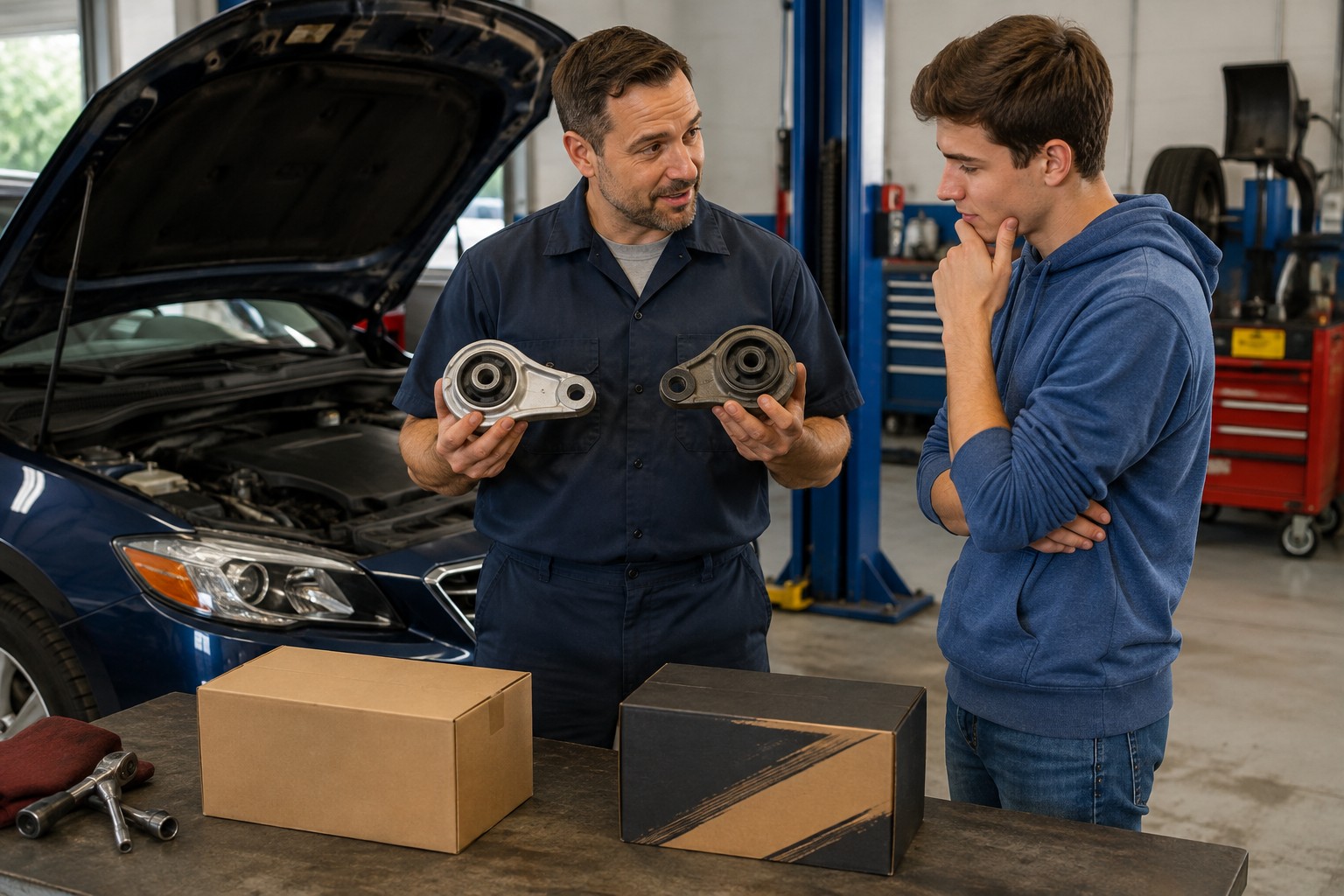
When your vehicle needs a replacement part, you may have a choice between an OEM (Original Equipment Manufacturer) part and an aftermarket part. OEM parts are made by or for the vehicle's manufacturer, while aftermarket parts are produced by other companies for use as replacements.
Neither choice is automatically better. Before deciding, it helps to understand the advantages and disadvantages of aftermarket parts.
Pros of aftermarket parts
Lower cost: Aftermarket parts are often less expensive than OEM parts, which can reduce repair costs. However, some premium or performance aftermarket parts may actually cost more.
More choices: Many manufacturers make aftermarket parts, giving consumers more brands, features, quality levels, and price points to choose from.
Often easier to find: Aftermarket parts can have better availability, potentially reducing repair delays. If your vehicle is sitting in the repair shop waiting for a part, "available today" can sound pretty appealing.
Quality can be comparable: A good-quality aftermarket part can perform as well as an OEM part. Some may even offer features or improvements that the original part did not. However, quality varies considerably among manufacturers and individual parts.
Cons of aftermarket parts
Quality varies: Not every aftermarket manufacturer produces parts to the same quality standards. Research the manufacturer and the particular part rather than assuming that all aftermarket parts are alike.
Fit may vary: Some aftermarket parts may not fit as precisely as the original part and could require additional adjustment during installation. A part that is almost the right size can quickly turn into a much bigger project than expected.
Warranty differences: Warranty coverage varies considerably among aftermarket parts. Some have limited or no warranty coverage, while others may come with warranties that are as good as—or better than—the OEM warranty. Check the warranty before you buy.
Possible effect on warranty coverage: Installing an aftermarket part does not automatically cancel your vehicle's warranty. However, if an aftermarket part or modification causes damage or contributes to a problem, the manufacturer may not cover that particular repair under the vehicle warranty.
Insurance considerations: After a crash, an insurance company may estimate repairs using aftermarket parts, depending on the insurance policy, vehicle, type of repair, and applicable state rules. Coverage specifically requiring OEM parts may depend on the provisions of your policy.
Safety-related components require extra care: For parts connected to airbags, brakes, steering, crash-protection structures, cameras, sensors, or other safety systems, it is especially important to verify that the replacement is appropriate for the vehicle. Saving a few dollars isn't much of a bargain if the part interferes with an important safety system.
Final thoughts
An aftermarket part isn't automatically lower quality, just as an OEM part isn't automatically the better choice. When choosing between them, consider quality, proper fit and function, warranty coverage, cost, and whether the part is appropriate for that particular vehicle and repair.
In other words, don't choose a replacement part simply because it is the cheapest box on the shelf.
At NHSA, our goal is to provide online driver education courses that equip all drivers with what they need to be safe drivers. Whether you are a teen seeking a learner’s permit, or an adult driver seeking a basic driver safety course, check us out online to see what courses are available in your state!
- 2026
- 2025
- 2023
- 2022
- 2021
- 2020
- 2019
- 2018
- 2017
