
What Is the VIN for Your Vehicle?
What Is the VIN for Your vehicle?
If you’ve ever looked at your vehicle’s dashboard or door jamb, you’ve probably seen a long string of letters and numbers labeled VIN. While it may look random, your Vehicle Identification Number (VIN) is actually a highly structured code that tells a detailed story about your vehicle. Understanding your VIN can help with registration, insurance, recalls, parts ordering, theft prevention, and vehicle history checks. Let’s break it down.
What is a VIN?
A VIN (Vehicle Identification Number) is a unique 17-character code assigned to every modern vehicle. No two vehicles share the same VIN. Think of it as your car’s fingerprint. Each section of the VIN has a specific meaning defined by international standards.
Example VIN: 1HGCM82633A123456
The VIN Structure Explained
The 17 characters are divided into three major sections:
- World Manufacturer Identifier (WMI) — Characters 1–3. These characters identify where the vehicle was built and who built it.
Character 1 – Country of Origin. Indicates the country where the vehicle was manufactured. (Examples: 1, 4, 5 → United States, 2 → Canada, 3 → Mexico, J → Japan, K → Korea, W → Germany
Character 2 – Manufacturer. Identifies the vehicle brand or maker.
Character 3 – Vehicle Type / Division. Further specifies the manufacturer or vehicle category.
- Vehicle Descriptor Section (VDS) — Characters 4–9. This portion describes the vehicle’s design and features. It may include information such as: Body style, Engine type, Transmission, Model or series, Restraint system
Character 9 – Check Digit (Important!). Used to verify that the VIN is valid. It helps detect fraudulent or mistyped VINs.
- Vehicle Identifier Section (VIS) — Characters 10–17. This section uniquely identifies the specific vehicle.
Character 10 – Model Year. This indicates the vehicle’s model year using a standardized code. (Examples: A → 2010, B → 2011, C → 2012, D → 2013. Letters and numbers progress over time)
Character 11 – Assembly Plant. Shows where the vehicle was physically assembled.
Characters 12–17 – Serial Number. A unique production sequence number for that vehicle.
Why the VIN Matters
Your VIN plays a critical role in many aspects of vehicle ownership:
Recalls & Safety Notices – Manufacturers track defects by VIN
Insurance & Registration – Ensures correct vehicle identification
Vehicle History Reports – Accident and ownership records
Theft Prevention – Assists law enforcement
Parts & Repairs – Confirms exact vehicle configuration
Where Can You Find the VIN?
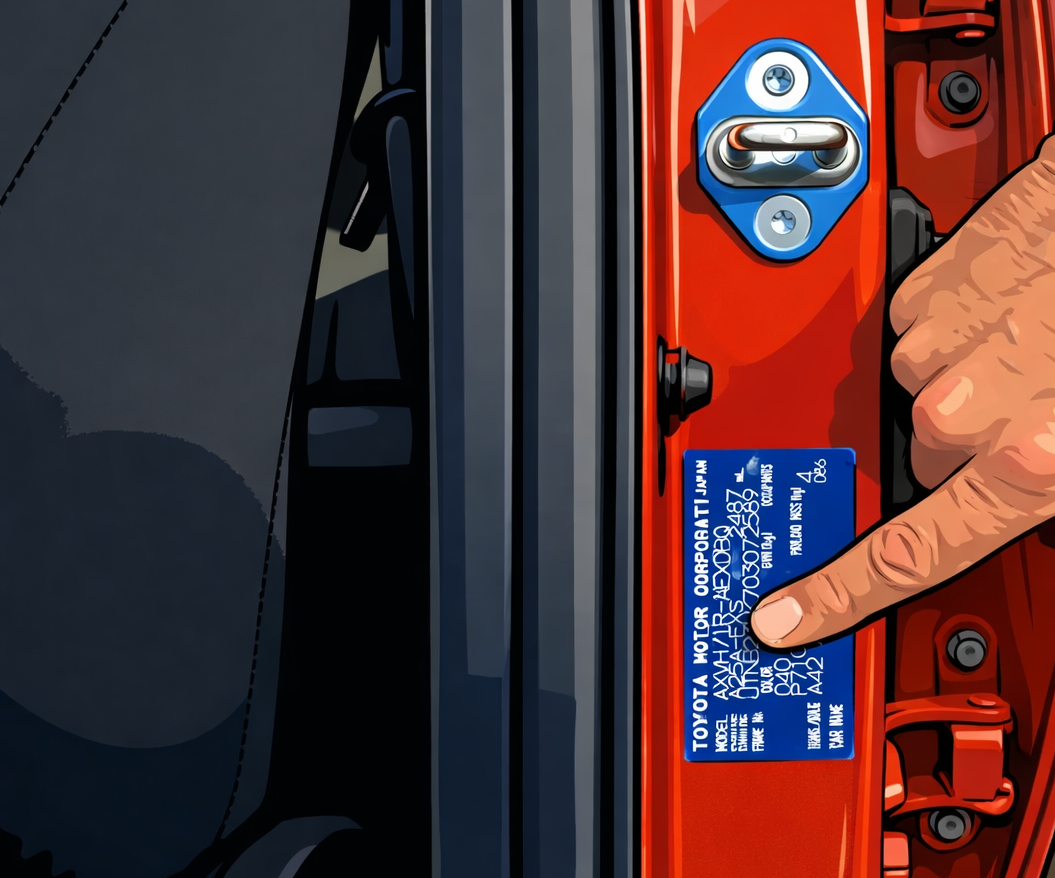
Most vehicles display the VIN in multiple locations:
Dashboard (visible through windshield)
Driver-side door frame / jamb
Vehicle title and registration
Insurance documents
Engine bay (sometimes)
Multiple VIN locations help prevent tampering.
Final Thoughts
While a VIN may seem like just a random code, it’s actually a carefully designed system that identifies your vehicle’s origin, build details, and uniqueness. Knowing how to read it can be surprisingly useful—especially when buying, selling, insuring, or repairing a vehicle.
Next time you see your VIN plate, you’ll know it’s more than just numbers—it’s your vehicle’s entire identity encoded in 17 characters.
At NHSA, our goal is to provide online driver education courses that equip all drivers with what they need to be safe drivers. Whether you are a teen seeking a learner’s permit, or an adult driver seeking a basic driver safety course, check us out online to see what courses are available in your state!
- 2026
- 2025
- 2023
- 2022
- 2021
- 2020
- 2019
- 2018
- 2017
