What's On Your Driver License?
What's On Your Driver License?
Some drivers carry their driver license for years without really looking at anything other than the photo—and perhaps wishing that photo could be retaken!
But your driver license is much more than a photo ID. It contains important information that identifies you, describes your driving privileges, and may tell law enforcement officers about restrictions or endorsements that apply to you. This little card may be one of the busiest pieces of plastic in your wallet.
Driver licenses are issued by individual states, so they don't all look the same or contain exactly the same information. Even the name isn't written the same way everywhere. Some states officially call it a "driver license," while others use "driver's license" or "drivers license." Whatever your state calls it, the basic purpose is the same: it shows that the state has granted you the privilege to operate certain types of motor vehicles.
Let's decode some of the information you are likely to find on a typical U.S. driver license.
Personal Information
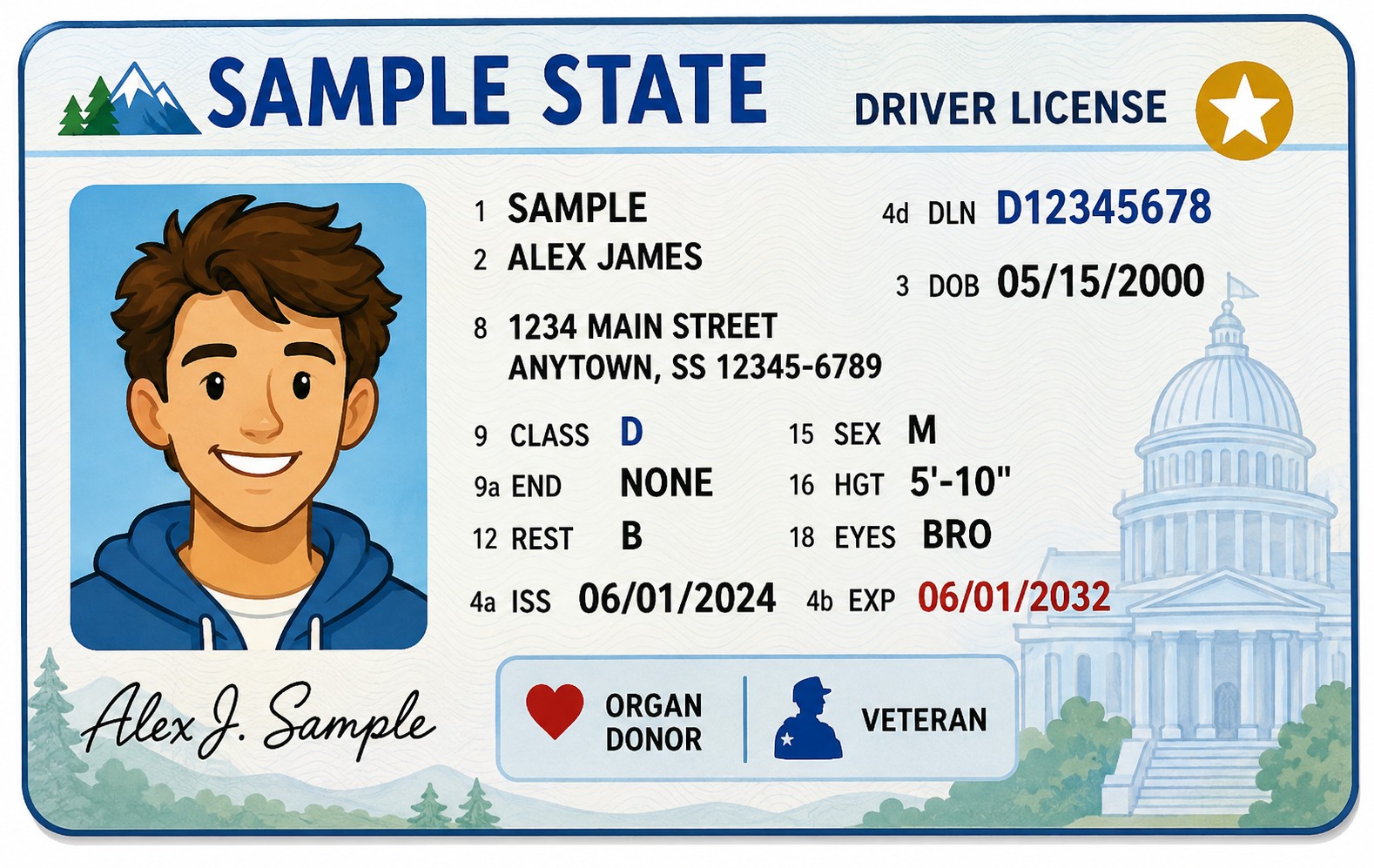
Your license includes information to help establish your identity. This may include several of the following: Your full legal name, date of birth, residential or mailing address, sex, height, eye color, photograph, and signature.
The information should be accurate. If you move or legally change your name, check with your state's driver licensing agency to find out how quickly you must report the change and whether you need a replacement card. Deadlines and procedures vary by state.
Driver License Number
Each driver license has an identifying number assigned by the state licensing agency. You may need to provide your driver license number when purchasing auto insurance, renting a vehicle, dealing with law enforcement, or completing certain official transactions.
Because this number is connected to important personal information, don't post photographs of your driver license online or casually share the number with other people. Your friends on social media really don't need that good a look at your new license!
License Class
Your license generally identifies the class of vehicle you are authorized to operate. For most drivers, this means a noncommercial license that permits them to operate ordinary passenger vehicles. States use different class names and letters, however, so don't assume that a particular letter means exactly the same thing everywhere.
Endorsements
An endorsement gives a driver additional driving privileges beyond those provided by the basic license. One common example is a motorcycle endorsement.
Restrictions
A restriction limits how or under what conditions you are permitted to drive. For example, a driver who passed the vision test while wearing glasses or contact lenses may have a corrective-lenses restriction. Other restrictions could require special vehicle equipment or limit driving to certain conditions.
Issue and Expiration Dates
Your driver license normally shows the date it was issued and the date it expires. Your license doesn't wrinkle with age—but it does expire! The length of time a license remains valid varies by state and sometimes by the driver's age or other circumstances. It is your responsibility to renew it on time. Don't assume that your state will remind you. Knowing the expiration date and renewing on time is much better than discovering your mistake during a traffic stop two months after it expired.
REAL ID
You may see a star near the top of your driver license. This generally indicates that the card is REAL ID compliant. Since May 7, 2025, travelers age 18 and older generally need a REAL ID-compliant identification document (or another federally accepted form of identification, such as a passport) to pass through TSA security checkpoints for domestic commercial flights.
Organ Donor Information
Many states allow drivers to register as organ and tissue donors when applying for or renewing a driver license or identification card. If you register, your license may display an organ-donor symbol or other designation.
Keep Your License Safe
A driver license is an important legal identification document, so treat it accordingly. Keep it secure and avoid damaging it. Don't lend it to another person, alter it, or post a clear photograph of it online.
It's a small card, but there's a surprising amount of information packed onto it—and knowing what that information means is part of being a responsible driver.
At NHSA, our goal is to provide online driver education courses that equip all drivers with what they need to be safe drivers. Whether you are a teen seeking a learner’s permit, or an adult driver seeking a basic driver safety course, check us out online to see what courses are available in your state!
- 2026
- 2025
- 2023
- 2022
- 2021
- 2020
- 2019
- 2018
- 2017
